A new report released by the America First Policy Institute (AFPI) indicates a considerable ideological imbalance within higher education, revealing that liberal faculty members outnumber their conservative counterparts by nearly seven-to-one across the country. This ratio marks a dramatic shift from 1969, when the disparity was less than two-to-one.
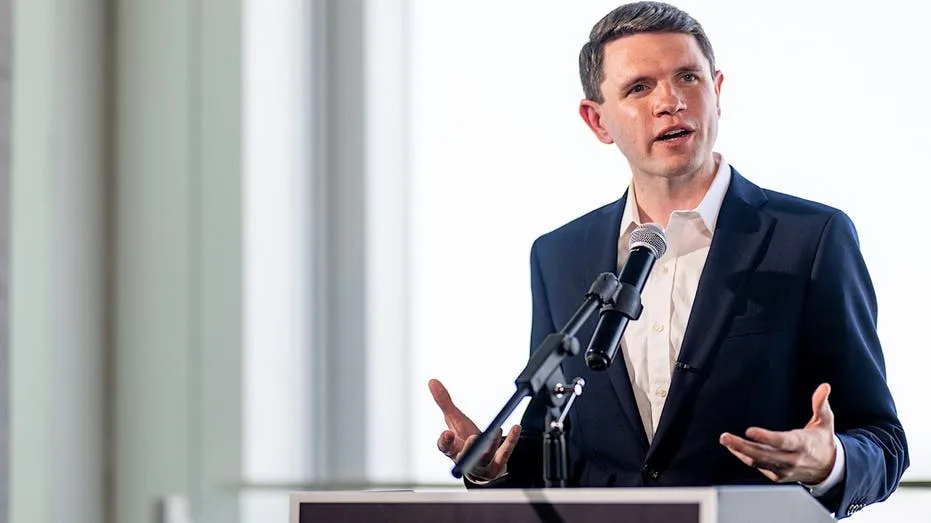
Dr. Michael Shires, Ph.D., who serves as vice chair of the Center for Education Opportunity at the America First Policy Institute, commented on the findings. He stated, “Having helped build a university founded on open inquiry, I've seen what higher education is supposed to be, and this report documents how far the academy has drifted from its primary purpose.”
“When an institution weaponizes academic freedom to purge the views it dislikes, it forfeits the very principle it claims to defend. Reviving genuine viewpoint diversity isn't an attack on academic freedom — it is its restoration,” Shires added.
Shifting Campus Demographics and Discrimination
The institute suggests that this pronounced left-leaning dominance in campus culture has significant implications for both academic freedom and hiring processes. Data from their survey indicates that 40% of faculty members openly admitted they would object to hiring a supporter of former President Trump. Furthermore, more than 80% of surveyed Ph.D. students acknowledged they would discriminate against a conservative job applicant.
“At many elite universities, registered Republican faculty are now more underrepresented than African American faculty,” the AFPI report highlights. It also notes, “More than half of conservative professors say they hide their views to keep their jobs.”
Federal Initiatives to Promote Civil Discourse
These findings emerge amid broader efforts by the Trump administration to address viewpoint discrimination, antisemitism, and diversity, equity, and inclusion (DEI) practices across higher education institutions.
Previously, the administration identified civil discourse as one of four critical areas of “national need” within its competitive grants program. Following this directive, the Department of Education outlined seven priorities under the Fund for the Improvement of Postsecondary Education (FIPSE) for the Fiscal Year 2025 competition cycle, specifically targeting these identified needs.
As part of this initiative, $60 million in federal grants has been allocated under a singular “absolute priority,” explicitly titled “Promoting Civil Discourse on College and University Campuses.”
Colleges and universities seeking this FIPSE funding are required to support programs designed to “foster respectful deliberation and debate on college and university campuses, where free expression has too long been eroded by censorship, harassment, and even violent unrest.”
Approved campus programs under this initiative include seminars, speaker series, conferences, debates, and various alternative learning opportunities aimed at welcoming a wider array of political viewpoints and encouraging open dialogue.
Debating the Role of Intervention
The America First Policy Institute contends that robust policy interventions are essential to dismantle the prevailing ideological monopoly. This stance pushes back against critics who argue that federal involvement poses a threat to university independence.
The AFPI report states, “Many well-meaning reformers nonetheless oppose government-led efforts to address viewpoint discrimination on ‘academic freedom’ grounds.” It elaborates, “In practice, this elevates institutional autonomy over individual academic freedom, allowing one of higher education’s means to obstruct its ends.”
The report concludes by advocating for a reorientation of priorities to safeguard vulnerable faculty members. It recommends that “Education reformers should instead prioritize the public interest in higher education by defending individual academic freedom and supporting all viable efforts —internal and external — to restore viewpoint diversity and equal treatment to viewpoint minority scholars and students.”