James Carville Disavows Iconic 'It's the Economy, Stupid' Slogan, Citing Concerns Over Trump
Veteran Democratic strategist James Carville states that perceived corruption now outweighs economic issues, leading him to reject his iconic 1992 campaign mantra.
Politics·

James Carville, the seasoned political strategist widely credited as an architect of Bill Clinton’s successful 1992 presidential campaign against incumbent George H.W. Bush and independent candidate H. Ross Perot, recently revealed a significant shift in his political philosophy. He stated this week that the actions of former President Donald Trump have compelled him to abandon the famous catchphrase often associated with Clinton's victory and his own rise to prominence.
The phrase, "It’s the economy, stupid," was initially conceived by Carville as an internal directive for campaign staff at Clinton's Little Rock headquarters. Its purpose was to maintain a sharp focus on economic issues, particularly as President Bush enjoyed elevated approval ratings following the Gulf War.
Shifting Focus: Corruption Over Economic Concerns
However, Carville now suggests that allegations of corruption involving former President Trump have overshadowed the traditional belief that economic conditions should be the paramount concern during election cycles. During a segment on his "Politicon" podcast network, after former Mount Holyoke dean Joseph Ellis referenced the iconic slogan, Carville interjected.
"So, professor, I thought about that recently – about ‘It’s the economy, stupid' – it's a great catchphrase. It's maybe one of the most oft-repeated things in politics," Carville remarked. "I now have come to detest the fact I said that."
Without explicitly naming Trump, Carville, who has frequently accused the former president of corruption in recent months, drew a stark contrast with the more traditional political figure of George H.W. Bush.
"I'll listen to people who say, ‘people don't care about corruption, they care about the economy -- As long as their incomes are up, they don't care what he does’ – and I'm afraid that's right," Carville explained. "But I said it in 1992, and say what you want about George H.W. Bush, he was not… a corrupt man at all; decent man too. We have now the breathtaking, staggering -- I understand if people say, ‘Yeah, you know, you're right, that's all people care about is the economy, and I won't do it, I don't say anything, I'm nice’," he continued, seemingly reflecting on voters who might prioritize economic prosperity over other character issues. "I want to punch him in the f---ing face. OK? Yes. I'm serious… Because the phrase actually haunts me today."
Strong Words and Political Backlash
In response to Carville's pointed remarks, a spokesman for the White House, Davis Ingle, characterized the Democratic strategist as a "stone-cold loser."
"[Carville] suffers from a severe and incurable disease known as Trump Derangement Syndrome, and it has rotted his peanut-sized brain," Ingle stated.
Carville's recent comments echo earlier sentiments. In a prior discussion with his co-host, former Washington bureau chief for the Wall Street Journal, Al Hunt, Carville asserted that "we are drowning; we’re suffocating in corruption." He also claimed that the former president's net worth had increased by an estimated $2 billion since assuming office.
"I’m just really fearful for the United States," Carville added.
His criticism of the former president has been ongoing. In February, Carville addressed Trump directly during one of his segments, telling him that his inner circle "hates" him and referring to him as a "fat, sorry, sack of s---." Since then, Carville has maintained his critical stance, recently expressing pride in what he proverbially termed "Trump Derangement Syndrome."
A Legacy in Democratic Strategy
Carville has remained a prominent voice in Democratic politics since his instrumental role in Clinton’s 1992 victory. That campaign also involved other notable figures such as George Stephanopoulos, now an ABC News anchor, who also occasionally engages in public disagreements with the former president. The 1992 campaign left several lasting cultural imprints, from Carville's economic mantra to Fleetwood Mac’s 1977 hit "Don’t Stop," which became the unofficial anthem for Clinton's successful presidential bid.
Carville's recent critique of his own historical slogan also coincides with his broader concerns about the current direction of the Democratic Party, having recently voiced disapproval of socialist nominees gaining traction within its ranks.
Related Stories
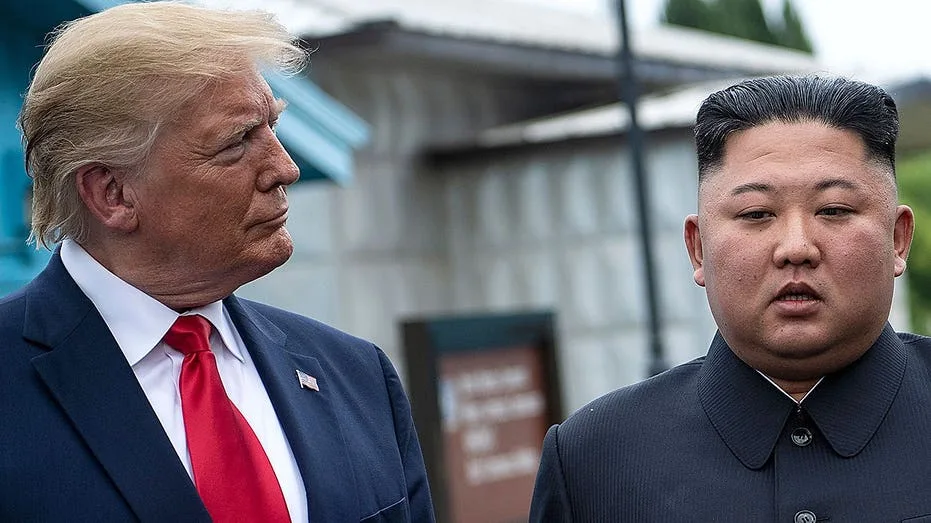
Trump Seeks Renewed North Korea Diplomacy Amid Shifting Geopolitical Landscape
Donald Trump is pursuing renewed diplomatic engagement with North Korea, confronting a significantly changed environment since his first term. Pyongyang now has a larger nuclear arsenal and a stronger alliance with
Aug 23
Senator Fetterman Urges Aggressive U.S. AI Development, Citing China's Gains and Aligning With Trump's Stance
Senator John Fetterman advocates for robust U.S. artificial intelligence development, cautioning that a cautious approach aids China in the global tech race. His position on AI and data center expansion mirrors that of
Aug 23

Nancy Kassebaum Baker, Pioneering Kansas Republican Senator, Dies at 94
Nancy Kassebaum Baker, a former Republican senator from Kansas, passed away at 94. Known for her moderate stance and bipartisan efforts, she made history as the first woman elected to the Senate independently and
Aug 22
Federal Judge Invalidates Trump-Era Visa Freeze for 75 Nations, Citing Lack of Authority
A federal judge in Manhattan overturned a Trump administration policy that froze immigrant visas for nationals from 75 countries. The ruling found the State Department lacked legal authority for the blanket denials,
Aug 22