US Housing Market Nears Major Shift: Demographic Trends Could Lead to Buyer Shortage
A new analysis indicates that slowing population growth and an aging demographic could reshape housing demand, potentially creating more homes than available purchasers.
Politics·
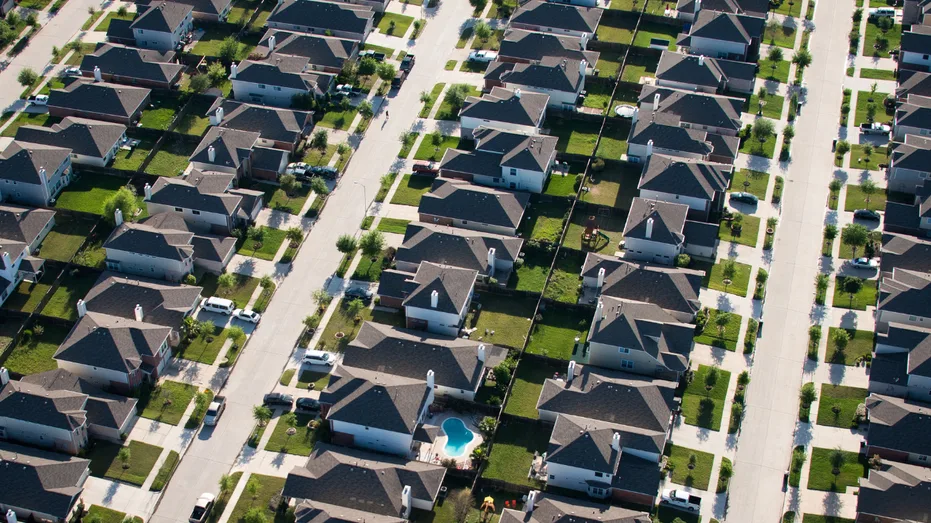
For an extended period, the United States grappled with a housing supply unable to keep pace with escalating demand. However, the nation's housing market may soon confront an entirely different challenge: a potential scarcity of purchasers.
This significant turning point is highlighted in a recent analysis by the Mortgage Bankers Association, which posits that the housing sector is on the brink of a substantial demographic transformation. Following over ten years where buyer interest consistently exceeded available properties, projections now suggest that decelerated population expansion and an increasingly older populace will likely diminish the overall requirement for new residential units. This shift could profoundly alter future estimations for construction activity, property valuations, and housing accessibility.
Such a scenario would represent a distinct departure from trends observed over the preceding decade.
A Decade of Demand Gives Way to Changing Dynamics
In the aftermath of the financial crisis, the millennial generation, currently the largest demographic cohort in the country, began reaching their peak homebuying age. This fueled a considerable increase in household creation, a pace that homebuilders found challenging to match.
This imbalance, where demand consistently outstripped supply, led to an upward trajectory in property values. The onset of the global pandemic further exacerbated this disparity, as historically low mortgage rates spurred an additional surge of prospective homeowners into the market.
The MBA report details that a combination of factors—including a deceleration in overall population growth, declining birth rates, an increasingly older demographic profile, and decreased immigration—is anticipated to translate into a reduced pool of individuals seeking to either purchase or rent residences throughout the coming decade. This trend is expected to unfold even as construction efforts persist in adding new housing inventory.
Should these projections materialize, certain regional markets might experience an excess of available homes compared to the number of interested purchasers. This scenario would provide buyers with a broader selection of properties and could complicate sellers' ability to command elevated prices, especially after a period of sustained market advantage for sellers, particularly prominent since the COVID-19 pandemic.
Regional Variations and Future Outlook
It is important to note that this does not imply an impending downturn across all housing markets.
The analysis underscores the fundamentally localized nature of housing markets. In states like Texas, Florida, and Arizona, where residential construction has seen significant acceleration, property values could experience moderation if the pace of new supply continues its upward trend.
Conversely, regions within the Northeast and Midwest, characterized by ongoing limitations in new home construction, may continue to observe robust growth in property appreciation.
Furthermore, the researchers dismiss the commonly discussed notion of a "silver tsunami," which posits a sudden influx of homes from Baby Boomer owners entering the market.
Instead, the expectation is that these properties will be introduced into the market incrementally over an extended period, thereby contributing to the overall housing stock without initiating an abrupt surplus.
Nevertheless, this overarching shift carries tangible implications for current homeowners. The report indicates that if the rate of new home construction outpaces the growth in demand, the rate of home price increases could decelerate, homeowners might accumulate equity at a slower pace, and prospective buyers would likely benefit from an expanded range of options.
Related Stories

Trump Seeks Renewed North Korea Diplomacy Amid Shifting Geopolitical Landscape
Donald Trump is pursuing renewed diplomatic engagement with North Korea, confronting a significantly changed environment since his first term. Pyongyang now has a larger nuclear arsenal and a stronger alliance with
Aug 23

Senator Fetterman Urges Aggressive U.S. AI Development, Citing China's Gains and Aligning With Trump's Stance
Senator John Fetterman advocates for robust U.S. artificial intelligence development, cautioning that a cautious approach aids China in the global tech race. His position on AI and data center expansion mirrors that of
Aug 23

Nancy Kassebaum Baker, Pioneering Kansas Republican Senator, Dies at 94
Nancy Kassebaum Baker, a former Republican senator from Kansas, passed away at 94. Known for her moderate stance and bipartisan efforts, she made history as the first woman elected to the Senate independently and
Aug 22

Federal Judge Invalidates Trump-Era Visa Freeze for 75 Nations, Citing Lack of Authority
A federal judge in Manhattan overturned a Trump administration policy that froze immigrant visas for nationals from 75 countries. The ruling found the State Department lacked legal authority for the blanket denials,
Aug 22